
CAD modeling in engineering projects constitutes a stage that determines the quality of subsequent numerical analyses. A CAD model is a carrier of geometric information – its topological correctness, surface continuity, and logical structure of solids and surfaces directly affect the process of computational mesh generation as well as the stability of FEM, CFD, CAA calculations, etc.
At Uniflow Dynamics, CAD modeling is treated as a key element of the computational process, not merely a design step. Each CAD model is created with consideration for the requirements of subsequent numerical analyses and potential optimization.
CAD geometric modeling
We develop 2D and 3D models based on commercial CAD systems (MSC Apex Modeler) as well as tools developed at UniFlow Dynamics. Depending on the application, the model may be created as:
- solid geometry for structural (FEM) analyses,
- surface geometry with high continuity (CFD),
- a parametric model intended for systematic analyses and optimization.
We model geometry both in solid form and as free surfaces, using standard exchange formats (STEP, IGES, Parasolid). For projects requiring high curvature quality, we use NURBS – this allows us to ensure any order of continuity and full control over local curvature, which is critical in aerodynamic and flow-related projects, e.g. flow through turbomachinery.
Models are created with their later use in simulations in mind: topology is verified for singularities, discontinuities, and gaps/defects; geometry is logically organized to facilitate the definition of loads, boundary conditions, and various types of partitions. Where appropriate, we provide parametric versions (defined design variables) enabling rapid generation of multiple variants.
Preparation of CAD models for CFD simulations and FEM structural analyses
Design models usually contain details that disrupt the mesh generation process: small chamfers, thin walls, minor protrusions, or other elements irrelevant from the perspective of the analysis. Our approach involves deliberate geometry adaptation: we remove features that are not significant for the physics of the problem, improve volume watertightness for CFD flow domains, and prepare contact definitions for structural analyses.
In practice, this means transforming a CAD model into a computational model optimized for the solver – with controlled simplification, preservation of key dimensions and functional features, and clearly defined domain boundaries (fluid/solid). Such prepared geometry shortens mesh generation time and reduces the risk of instability during CFD, FEM, or CAA simulations.
- In CFD analyses, we focus on clear definition of the fluid domain, elimination of discontinuities, and preparation of computational meshes, including meshes for solids where required.
- In FEM analyses, we focus on ensuring correct solid topology, logical component partitioning, and preparation of surfaces for defining contacts and load conditions.
Parametric design and modeling with optimization support
In projects requiring iterative design modifications, we apply a parametric approach. Key dimensions, angles, and curvature radii are defined as variables, allowing rapid generation of subsequent geometric variants without manual model reconstruction.
Such prepared geometry can be directly coupled with CFD or FEM analysis in order to:
- evaluate the impact of design changes on flow parameters,
- reduce mass while maintaining structural strength,
- minimize noise levels in acoustic analyses.
An example application is the modeling of a turbofan engine inlet using NURBS surfaces, where control of curvature and geometric continuity directly affects flow distribution characteristics and total pressure losses.
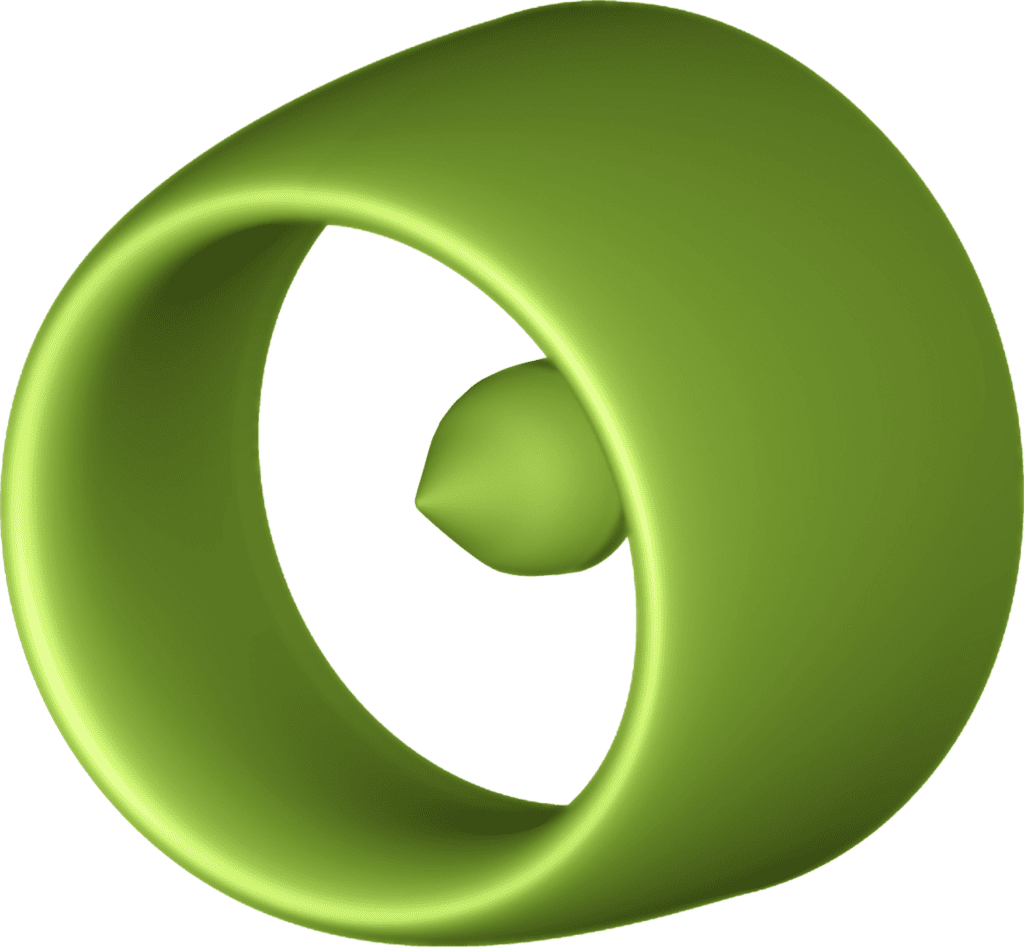
Turbofan engine inlet defined using the NURBS method
Computer-aided engineering – integration of CAD with CAE
Our CAD modeling is fully integrated with CAE services. Geometry prepared at the CAD stage is transferred directly to the computational environment – we minimize manual conversions and reconstructions. The process includes: topological verification, adaptation of the model to the physical phenomenon (flow/structural/acoustics), mesh generation, and iterative geometry adjustments in response to simulation results.
In practice, the workflow looks like this: CAD model → computational model preparation → mesh generation → simulation (CFD / FEM / CAA) → results analysis → geometry modification (if needed) → repeat. This approach reduces the number of iterations and shortens project time while maintaining control over design changes.
Scope of applications and typical deliverables
We prepare CAD modeling for specific applications: flow analyses (CFD), structural calculations (FEM), acoustic/vibroacoustic analyses, and optimization processes. Typical deliverables include: CAD models in STEP/IGES/Parasolid formats, mesh-ready versions (with comments on simplifications), a list of critical geometric assumptions, and a checklist of required input data for simulation quotation.
What to provide for a quotation – data that accelerates project start
To speed up quotation and project initiation, please provide: CAD files (STEP/IGES/Parasolid), a brief description of the component function, expected operating conditions (temperatures, loads, flows), accuracy requirements (tolerances), and information on planned iterations/variants. If you have 2D drawings, photos, or measurement data, include them – this will facilitate geometry reconstruction.
CAD modeling at Uniflow Dynamics is a service focused on simulation efficiency and CAE result quality. We prepare geometry so that it is solver-neutral and engineer-friendly. If you need models ready for CFD, FEM, or acoustic analyses – send a project brief or CAD files, and we will prepare a quotation and proposed workflow.